Operator manual · General
10 Best Software SMS Marketing Tools Compared for 2026
In short
Compare 10 software SMS marketing platforms on campaign tools, automation, compliance and pricing, with prices quoted from each seller's own page.
DBotMaker research desk · Updated November 26, 2026 · 16 min read
In 2025, 30% of Americans who experienced a cyberattack or digital scam said it began through a text message or messaging app, up from 20% the prior year, with phishing involved in 39% of reported attacks or scams, according to Consumer Reports' 2025 press release. That surge turns software SMS marketing into a trust and compliance decision first, and a broadcast-feature comparison second.
For most small businesses that need mass campaigns and two-way replies on one plan, SimpleTexting is the pick. It pairs bulk SMS and MMS campaigns with a shared inbox, keyword opt-ins, and three user seats from the entry tier, so teams don't need separate tools for broadcasts and customer replies. Narrower buying situations point elsewhere: EZ Texting suits non-technical teams that want a lower-priced browser launchpad, Postscript fits Shopify stores built around cart and shipping triggers, Klaviyo wins when email and SMS must run off shared customer profiles, Trumpia serves mid-market teams needing structured workflows and account management, and Twilio is the right call when engineers are embedding SMS inside custom software.
The DBotMaker research desk builds every spec sheet cell from each seller's own public pricing, plan, and feature pages, scoring every platform on the same weights: capabilities (40%), ease of setup (30%), and value (30%). Each tool below is judged on four practical factors marketers weigh before signing up: campaign tools, automation depth, compliance and carrier-fee exposure, and the monthly bill at a stated message volume.
Compliance reality: Headline subscription prices rarely reflect the final invoice. Carrier pass-through fees, dedicated number leases, and 10DLC or toll-free registration charges change the real monthly bill across nearly every provider on this list.
Table of Contents
- 1. SimpleTexting
- 2. EZ Texting
- 3. SlickText
- 4. Textedly
- 5. Postscript
- 6. Klaviyo
- 7. Omnisend
- 8. Trumpia
- 9. Textmagic
- 10. Twilio
- Entry price, trial and best fit for each SMS marketing platform
- Match the Platform to Your Volume and Team
1. SimpleTexting
SimpleTexting earns the overall small-business pick because it handles one-to-many promotions and one-to-one customer replies inside the same workspace. A 2024 survey of 1,400 consumers, business owners, and digital marketers in SimpleTexting's 2024 texting statistics report found that 80% of businesses used SMS marketing software, up from 55% two years earlier, while 79% of consumers had opted in to business texts, compared with 71% the prior year. Adoption ran highest in healthcare (86%), ecommerce and retail (84%), and consumer services (81%), which reflects why teams need both campaign broadcasts and responsive two-way support.
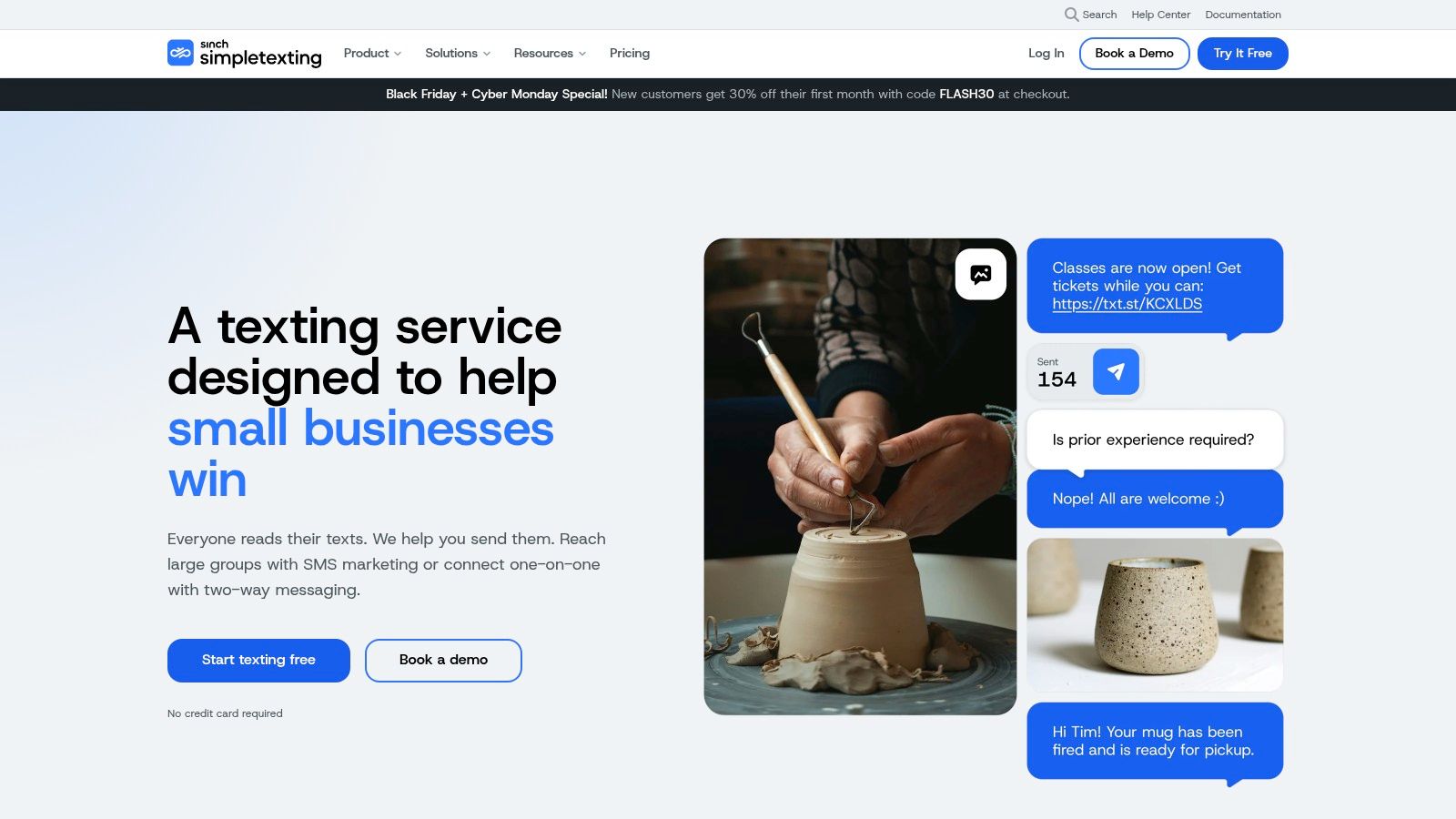
The platform layout below shows how SimpleTexting brings campaign tools, audience segments, and inbox threads into one dashboard.
Core Features and Trade-Offs
SimpleTexting's published entry plan starts at $29 per month for 500 credits on SimpleTexting's pricing page (checked in 2026), backed by a 14-day trial. Paid plans include three user seats, iOS and Android apps, and rollover credits for a limited period.
- Campaign and inbox tools: Teams get mass SMS and MMS blasts, drip campaigns, auto-replies, and a shared two-way inbox where incoming SMS replies are listed as free on the pricing page.
- List growth and integrations: Built-in opt-in forms, pop-ups, text-to-join keywords, analytics, API access, and connectors such as Mailchimp and Zapier handle subscriber capture and syncing.
- Cost exposure: Carrier fees, number charges, and registration fees can push the final invoice above the $29 headline tier, and pricing scales with message volume and number type.
- Short-code economics: Upgrading from a standard local or toll-free number to a dedicated short code adds substantial monthly expense for small teams.
2. EZ Texting
Say a regional dental clinic or retail shop needs to schedule weekend promotions and appointment reminders without assigning a technical specialist to configure the tool. EZ Texting is built for that exact browser-based workflow, pairing straightforward campaign scheduling with AI-assisted message writing and replies. In 2025, nearly half of consumers surveyed in EZ Texting's 2025 Consumer Texting Report said they had made a purchase after receiving a business text message.
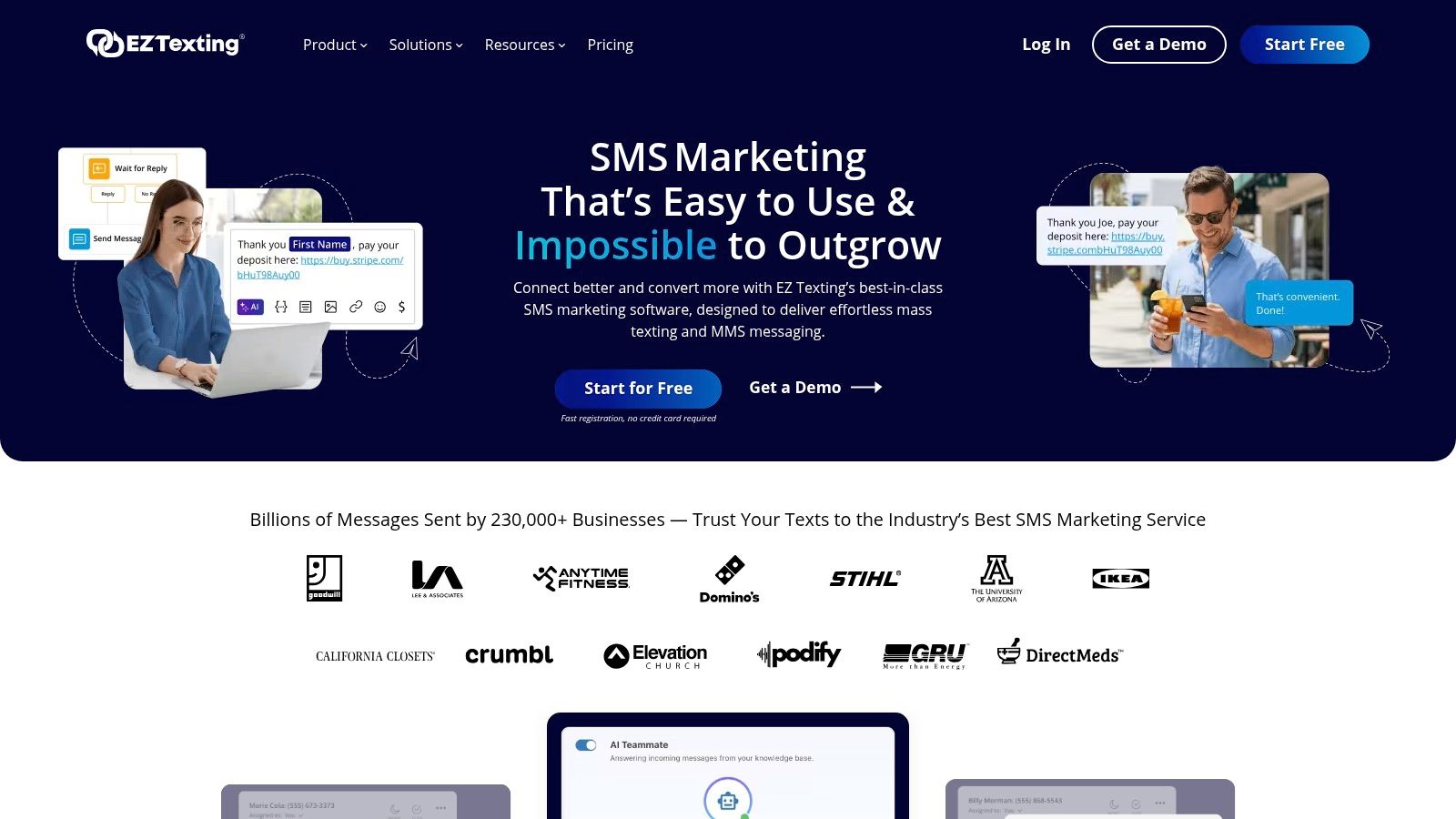
The landing view below highlights EZ Texting's browser-first positioning for small and midsize business alerts and promotions.
Speed explains why browser-based alert tools stay in high demand, though buyers shouldn't misread headline metrics. Industry summaries compiled in Sender's SMS open rate guide frequently cite an average SMS open rate near 98%, compared with 20% to 30% for email, yet SMS lacks a universal, technically verified open event. A more dependable benchmark is attention speed: roughly 90% of text messages are read within one to three minutes of receipt.
Plan Pricing and Telecom Fees
EZ Texting lists its Launch plan at $25 per month for 500 credits on EZ Texting's pricing page (checked in 2026), paired with a 14-day trial and free inbound messages on published plans. Contact capture covers keywords, QR codes, and signup forms, supported by a team inbox, reporting, integrations, compliance tools, and an open API.
Watch two pricing trade-offs before committing. A separate telecom fee may apply on the Launch tier, and teams sending beyond 500 credits quickly need add-ons or a larger plan, where enterprise pricing climbs sharply above the entry rate.
Fast readership doesn't rescue a poorly timed alert. Because subscribers see texts within minutes, weak list hygiene or vague offers trigger opt-outs just as quickly.
3. SlickText
Choosing a sending number changes both deliverability and monthly overhead, and SlickText stands out by letting teams pick across local 10DLC, toll-free, short-code, and RCS options on one platform. According to Omnisend's July 15, 2026 number pricing comparison, a US dedicated short code is commonly priced at $500 to $1,000 per month before carrier setup fees, message credits, and software plan charges, whereas long codes generally carry a one-time or annual 10DLC registration cost. SlickText lets smaller brands start on affordable 10DLC or toll-free numbers and move up only when volume justifies a dedicated short code.
The interface preview below shows SlickText's focus on flexible campaigns, subscriber growth, and messaging workflows.
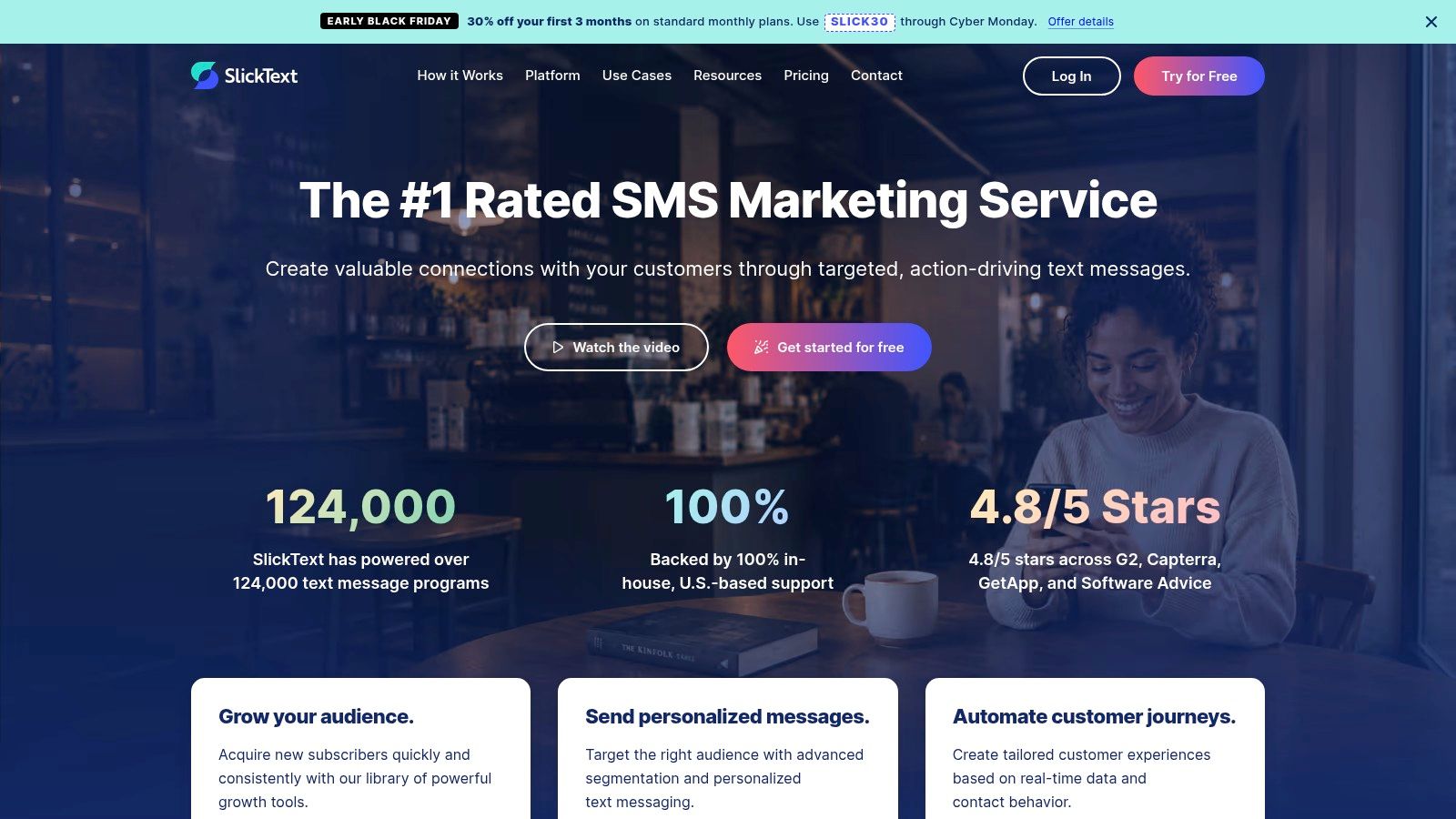
SlickText publishes entry pricing at $29 per month for 500 credits on SlickText's pricing page (checked in 2026), and it offers a 14-day trial without requiring a credit card. Standard paid plans provide the full feature set rather than gating automations behind higher tiers.
- Full feature access: SMS and MMS campaigns, automations, workflows, audience management, unlimited contacts, and rollover credits are included across standard paid tiers.
- Modern messaging formats: Built-in RCS messaging options give marketers a path toward richer branded messages alongside standard SMS and MMS.
- Direct support channels: Live phone, chat, and email support help non-technical teams resolve registration and workflow snags.
- Geographic and fee limits: Carrier fees are passed through separately, standard plans cover the US and Canada (buyers needing other regions should verify coverage), and high-volume accounts require a custom quote.
4. Textedly
Broadcast senders pushing thousands of messages per month need published volume tiers, not a sales call. Textedly organizes its entire lineup that way, starting at $29 per month for 500 messages on Textedly's pricing page (checked in 2026). Once volume climbs into the thousands, incremental revenue per send matters far more than raw send counts: SimpleTexting's 2024 commercial services benchmark report lists benchmark click-through rates of 21% to 35%, conversion rates of 21% to 30%, and unsubscribe rates of 1% to 2%, while cautioning that headline open rates apply only to messages that were delivered.
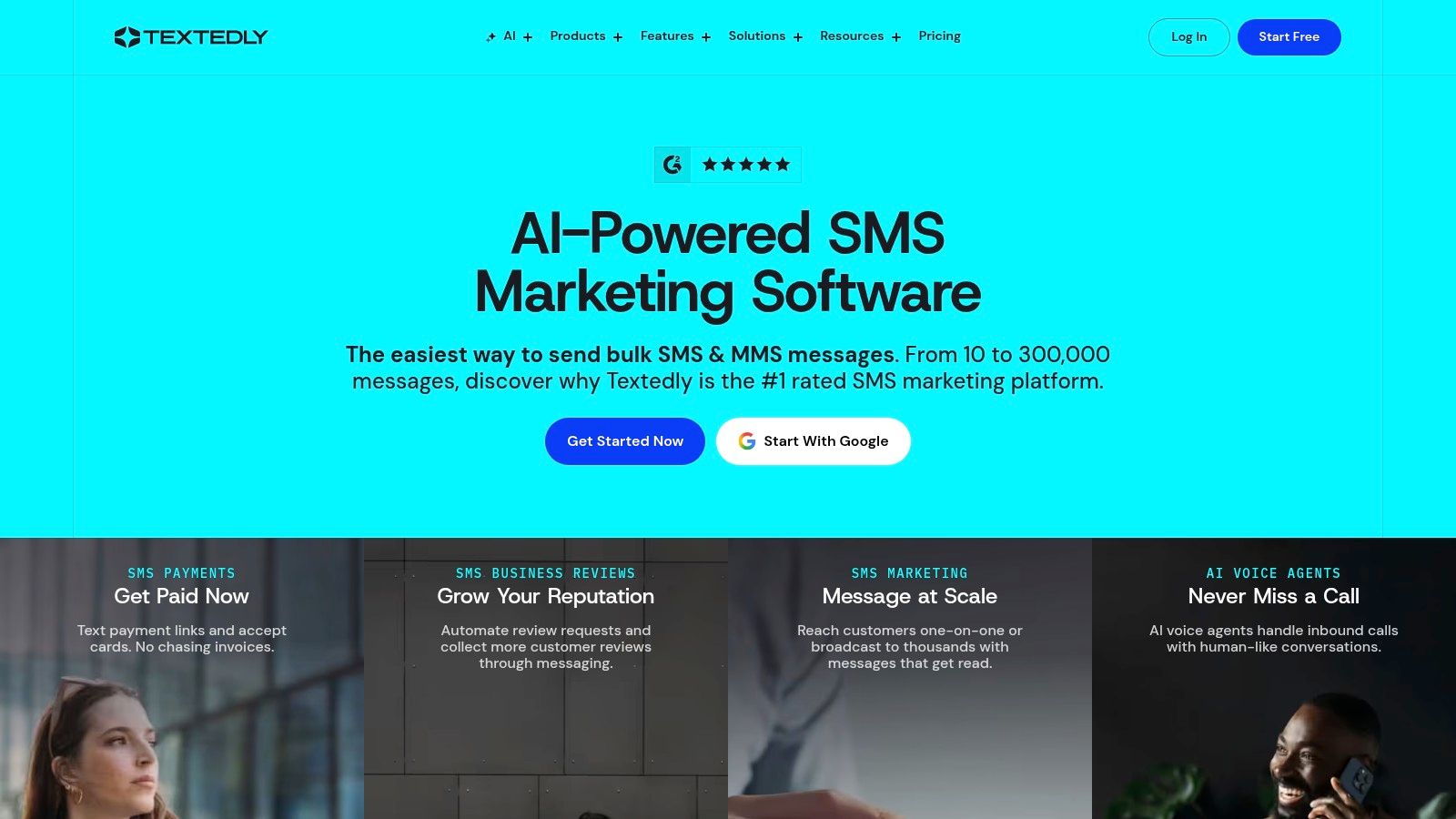
The product screen below illustrates Textedly's campaign builder and omnichannel messaging layout.
Volume Tiers and Included Tools
Every plan covers the core sending stack: mass SMS, MMS, inbound messaging, an omnichannel inbox, and integrations with the CRMs, ecommerce platforms, and marketing tools a growing list usually depends on. Senders can choose toll-free, 10DLC, or short-code numbers. Inbound messages are listed as free, and annual billing is presented as including 20% more messages per month, which lets predictable seasonal senders stretch the same budget further.
The vendor also bundles text-to-pay, Google Business Reviews, and AI features across plan levels. That breadth looks appealing on paper. Costs climb steeply as monthly allowances grow, though, so buyers should confirm which AI and text-to-pay functions fit their workflow and pin down carrier, number, and compliance fees before committing to a tier.
5. Postscript
A Shopify store that texts every subscriber the same weekly blast is paying for unsubscribes. Research summaries of 2024 consumer-behavior data in Shno's SMS marketing statistics compilation report that 72% of consumers had made a purchase after receiving a text from a brand, while 61% said they unsubscribe when messages arrive too frequently. Postscript is built for ecommerce and Shopify stores that want store events, such as an abandoned cart or a shipped order, to trigger each text instead.
The platform screen below displays Postscript's ecommerce-first campaign and automation workspace.
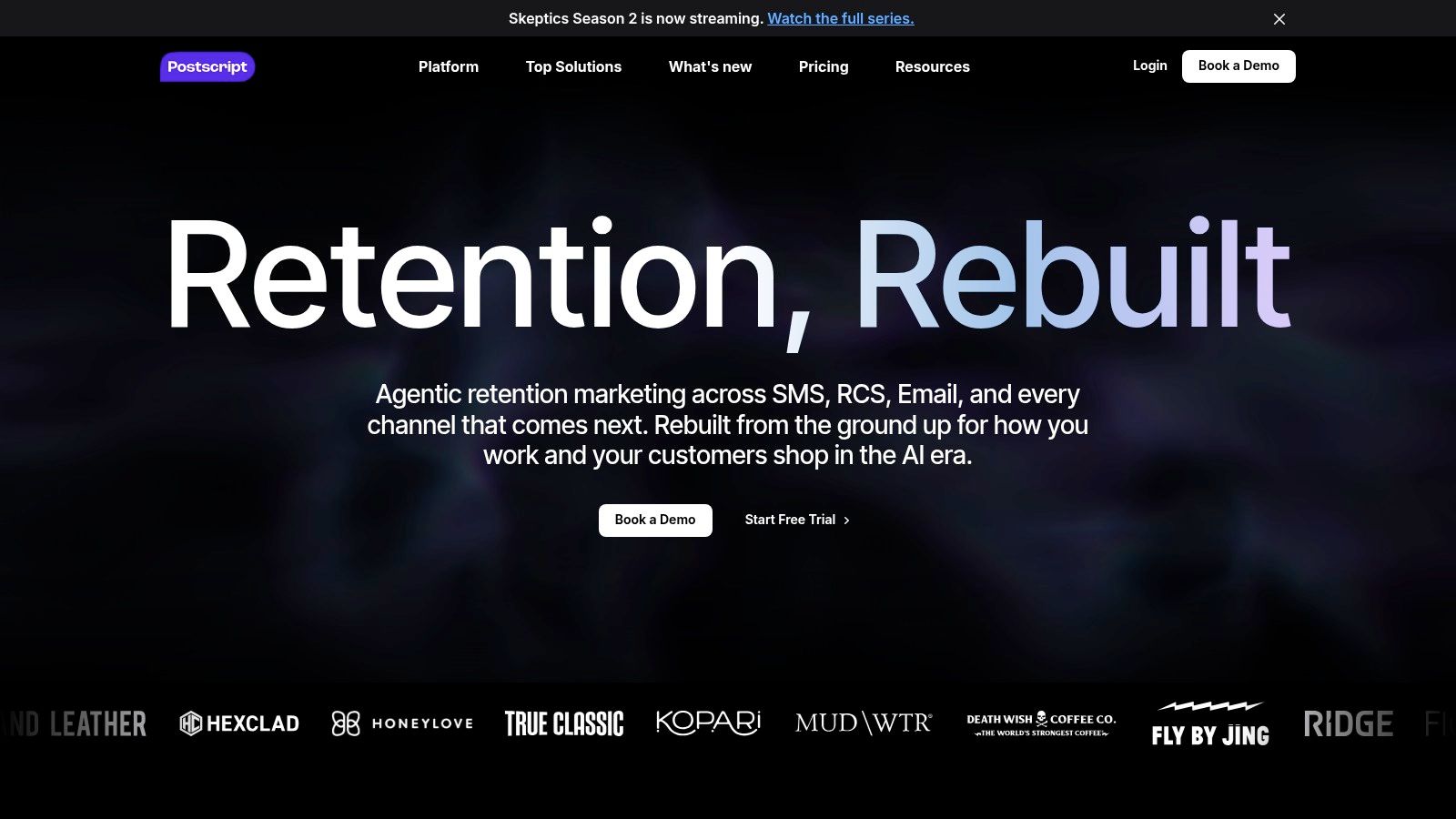
On Postscript's pricing page (checked in 2026), the Starter plan lists no software fee but enforces a $49 monthly minimum spend, with message and carrier costs applying on top. That structure ties messaging outlay directly to campaign and automation volume, which suits stores with steady traffic. It punishes seasonal sellers, because the floor applies whether or not a single text goes out.
What you get for that spend:
- Store-driven automations: Visual builders handle welcome flows, cart and browse abandonment, upsells, and shipping updates pulled directly from Shopify data.
- Checkout and site capture: Subscriber acquisition tools include website pop-ups, checkout collection, and compliant opt-in forms.
- Segmentation and replies: Stores segment audiences using Shopify purchase history and third-party integrations, backed by campaign reporting, reply management, and API access on higher tiers.
- Narrow fit and cost floor: Postscript isn't built for general-purpose business texting, the $49 minimum applies even during slow months, and final SMS and MMS rates shift with carrier fees and message type.
Pick Postscript if Shopify is your storefront and automation depth matters more than channel breadth. Look elsewhere if you need one tool for SMS plus email plus non-ecommerce texting.
Merchants pairing SMS cart recovery with live storefront automation can also compare dedicated Shopify chatbot platforms so automated chat and text flows don't double-message the same shopper.
6. Klaviyo
Compliance failures rarely start with a missing signup checkbox; they happen when a customer opts out in one place and keeps getting messaged from another system. As documented in Broadnet's A2P messaging regulation timeline, US FCC TCPA revocation rules took effect on April 11, 2025, requiring businesses to honor opt-outs made through any reasonable means within 10 business days, while the previously proposed one-to-one consent rule was vacated and never took effect. Consumer surveys cited in that same timeline show 53% of respondents identified texting too often as the fastest way to lose SMS subscribers, 21% cited spam-like content, and 11% cited irrelevance.
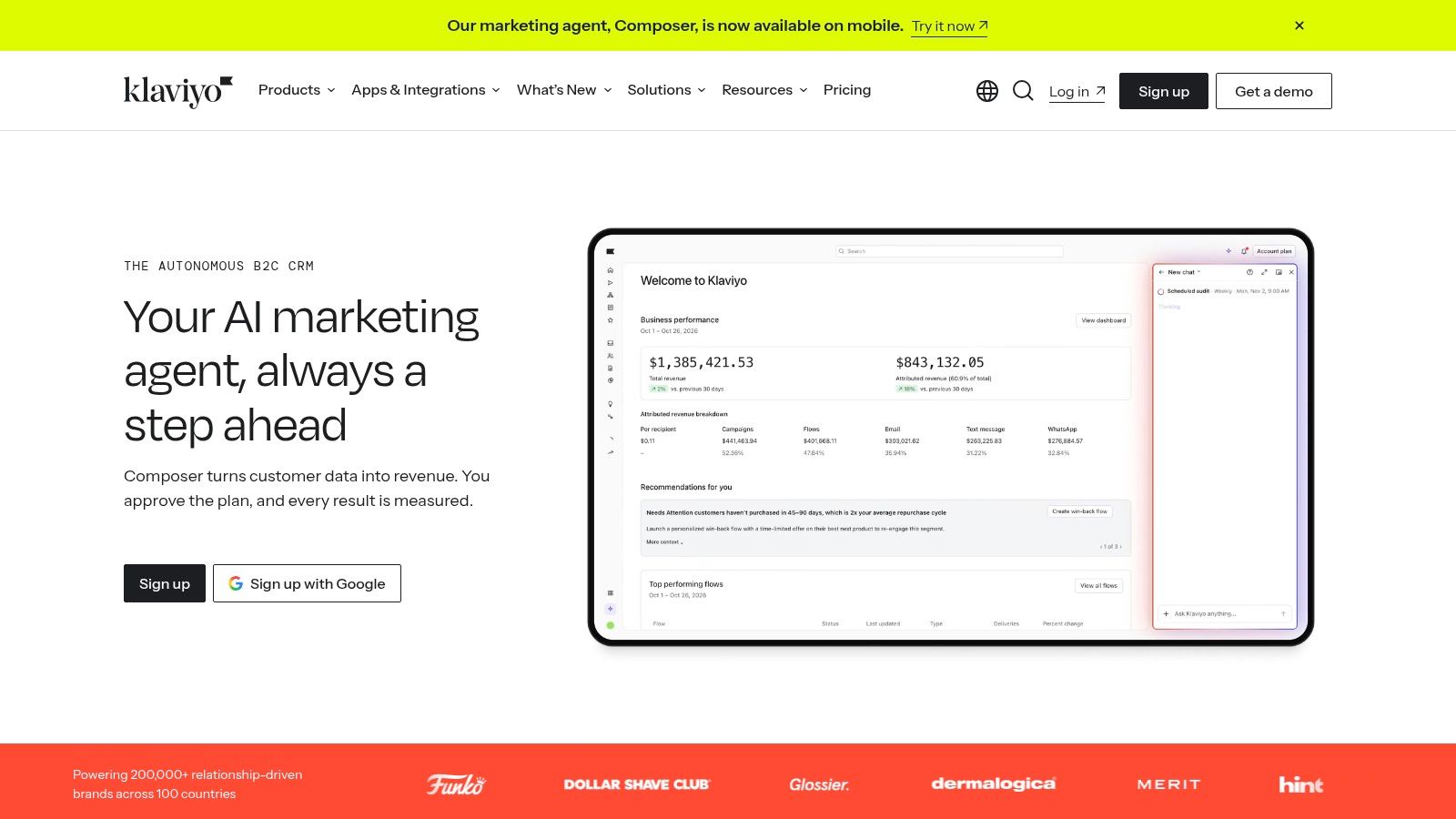
Klaviyo addresses that cross-channel risk by housing email, SMS, customer profiles, and segmentation inside one data platform. The dashboard preview below reflects how Klaviyo brings multichannel performance and customer profiles into one reporting view.
Shared Profiles and Variable Billing
On Klaviyo's pricing page (checked in 2026), the free plan includes $5 of mobile messages per month, while paid mobile messaging costs vary by usage, destination country, channel, and number type. Teams can target subscribers using shared customer profiles, coordinate email and SMS timing from a single calendar, and track results through unified integrations and reporting dashboards.
Billing check: Klaviyo has no single universal per-message price for SMS, and mobile messaging spend may be billed separately from other platform components. Confirm how message segments and destination countries affect your credit burn before migrating a large list.
For ecommerce teams already running email automation and behavioral segments, consolidating SMS inside Klaviyo eliminates data silos. Businesses that only need straightforward bulk texting, however, will pay in complexity for a customer-data suite they don't use.
7. Omnisend
Marketers comparing software SMS marketing tools frequently see conflicting engagement numbers because vendors measure clicks differently. Omnisend's 2026 SMS marketing benchmarks reported an average SMS campaign click-through rate of 12.39%, compared with 0.74% for email, underscoring why buyers should inspect delivered-message denominators, unique versus total clicks, and bot filtering rather than trusting unverified headline claims. Omnisend pairs those ecommerce analytics with email, SMS, and web push inside one workflow builder.
The workspace view below shows Omnisend's multichannel campaign approach for online stores.
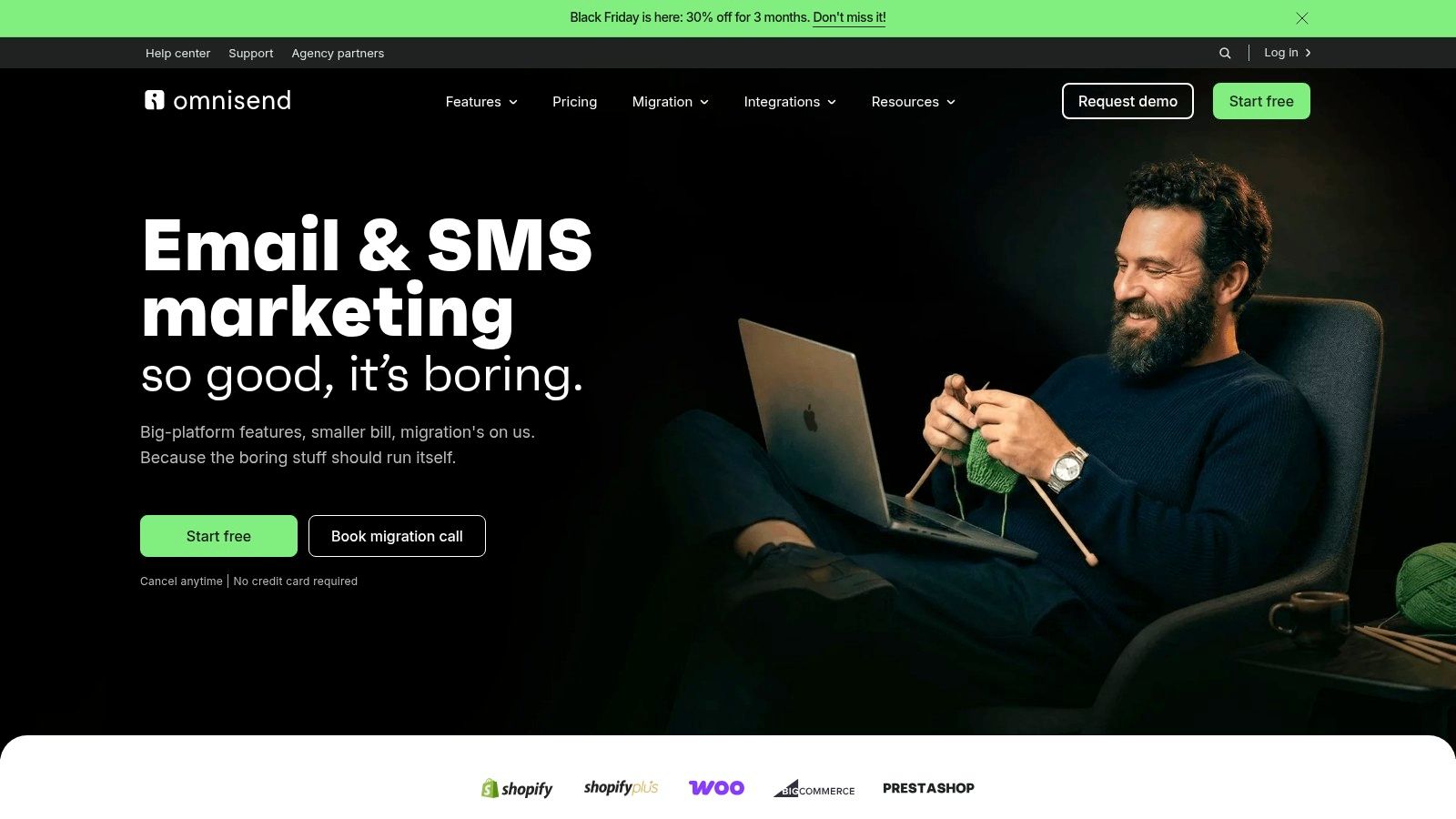
Omnisend publishes US SMS rates starting at $0.009 per message by monthly spend band on Omnisend's pricing page (checked in 2026), but eligibility rules require careful reading before signing up.
- Pro plan gate for new signups: New customers on Free or Standard plans can't currently use SMS; the Pro plan is required, and SMS usage is charged separately from the Pro subscription.
- Prebuilt ecommerce automation: Ready-made store workflows and custom workflows on eligible plans cut initial setup time across email, SMS, and web push.
- Regional rates and MMS: SMS pricing depends on recipient country, with MMS available in the US and Canada.
- Legacy plan differences: Pricing and SMS eligibility differ for some legacy subscribers, so prospective buyers must verify current new-customer terms directly on the checkout screen.
For stores wanting email, push notifications, and text reminders under one roof, Omnisend reduces channel sprawl. Teams looking for a standalone, entry-level texting plan without paying for a Pro email suite should look at SimpleTexting or EZ Texting instead.
8. Trumpia
Automated marketing texts in the United States carry strict legal thresholds that go well beyond owning a customer's phone number. In a 2024 Federal Communications Commission ruling, the FCC stated that callers and texters soliciting business must obtain prior express written consent before making covered robocalls or robotexts under the Telephone Consumer Protection Act, and marketing texts to wireless numbers on the National Do Not Call Registry require prior express invitation or permission unless an exception applies. Trumpia targets organizations that need structured workflows, access controls, and onboarding support to run compliant SMS and email programs at scale.
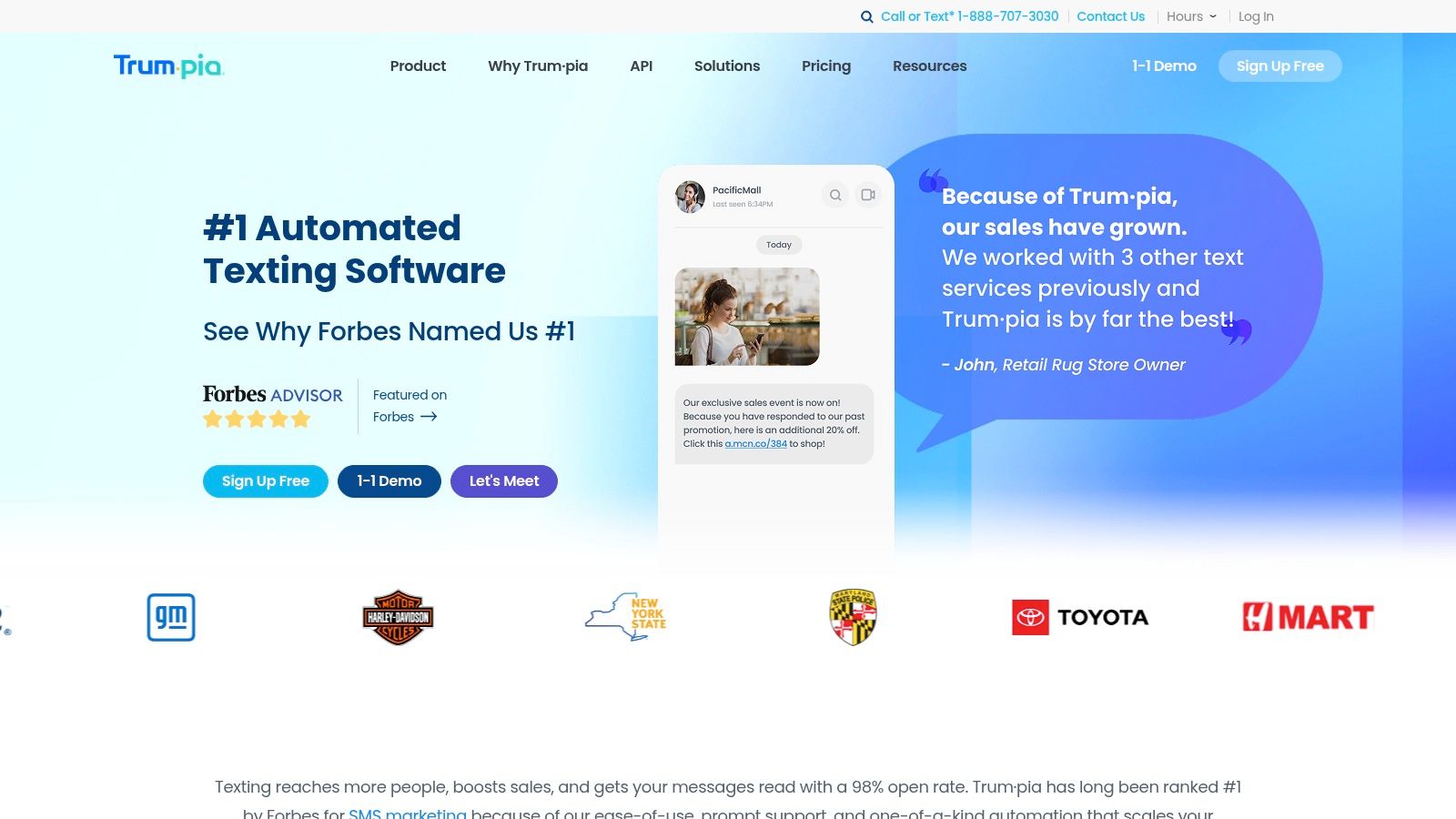
The platform screen below highlights Trumpia's business messaging workspace and workflow controls.
Standard Versus Smart Tiers
Published pricing on Trumpia's pricing page (checked in 2026) lists Standard from $60 per month and Smart from $95 per month with annual billing. Both tiers support SMS, email, picture, and video messaging alongside a two-way inbox and audience targeting, while the higher Smart tier adds automated workflows, access controls, training, workflow customization, and account-management support.
That entry price sits well above small-business texting tools, and many of the advanced workflow features only become available on the pricier Smart tier. Buyers should confirm final quotes and included message allowances directly against a written proposal, and teams serving international audiences on chat apps may want to evaluate WhatsApp Business platforms alongside SMS.
9. Textmagic
Business texting isn't limited to promotional blasts. In 2024, 91% of surveyed organizations in the United States and Canada used business texting to communicate with customers, according to Text Request's 2024 State of Business Texting Report. Textmagic serves teams whose volume swings from month to month across operational alerts, customer replies, and marketing campaigns.
The dashboard preview below shows Textmagic's straightforward interface for sending campaigns, managing templates, and answering replies.
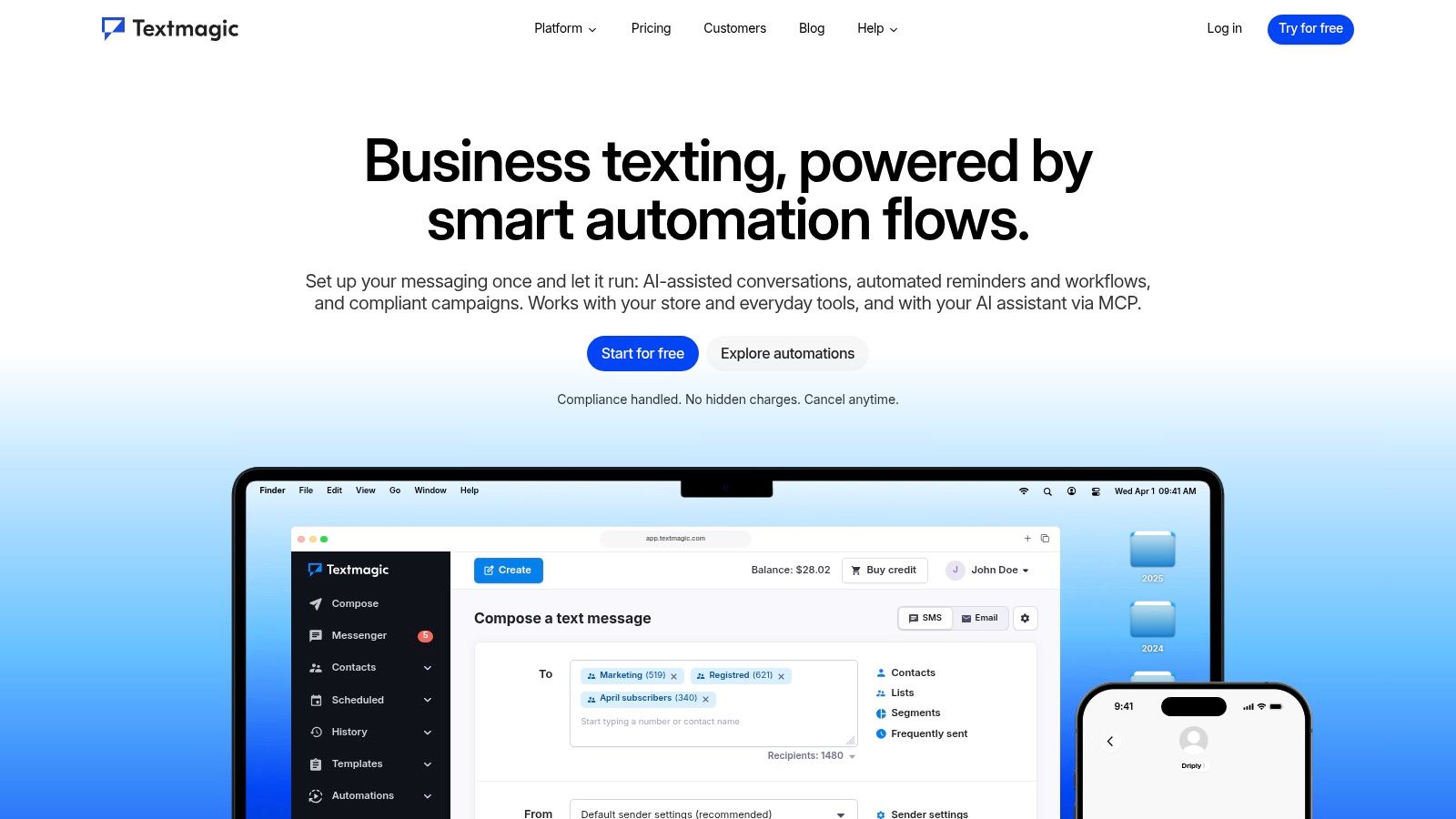
Textmagic lists a US SMS rate of 4.9 cents per message on Textmagic's pricing page (checked in 2026), with both pay-as-you-go and monthly billing choices.
- Flexible billing for uneven volume: Pay-as-you-go credits suit seasonal operators and service teams that don't want unused monthly subscription allowances expiring.
- Operational and marketing reach: SMS and email campaigns, message templates, and a shared team inbox handle both promotions and day-to-day customer conversations.
- API and carrier options: Developer integrations and bring-your-own-carrier-provider connections extend Textmagic beyond the standard web dashboard, though connected CPaaS numbers can introduce separate provider fees.
- High-volume cost check: Per-message pricing requires disciplined budgeting as send counts climb, and buyers must verify number availability and destination-market rates before launching international campaigns.
Teams texting recipients in the United Kingdom also face strict statutory rules. Under the Information Commissioner's Office electronic-mail marketing guidance, updated November 19, 2024, Privacy and Electronic Communications Regulations generally require specific, knowingly and freely given consent for unsolicited marketing texts, pre-ticked boxes don't qualify under UK GDPR, and every marketing text must identify the sender and explain how to opt out.
10. Twilio
Global adoption has pushed SMS deep into product architecture rather than keeping it isolated in standalone marketing tools. In 2025, 80.4% of businesses reported actively using SMS marketing in a global survey of 546 marketing professionals published by Decision Telecom. When a company wants authentication codes, delivery alerts, and promotional triggers generated directly from its own app or CRM, Twilio provides the programmable messaging APIs to build that pipeline from the ground up.
The developer platform screen below illustrates Twilio's API-first environment rather than a turnkey campaign dashboard.
API Flexibility and Hidden Build Costs
Twilio uses usage-based pricing documented across country-specific pricing pages on Twilio's website (checked in 2026), where final per-message charges vary by destination country, message type, carrier, and message segment count. Technical teams gain complete control over routing, custom integrations, and application-driven workflows, aligning messaging spend strictly with actual traffic.
The catch is operational ownership. Twilio isn't a ready-made marketing app, so campaign interfaces, contact list management, compliance suppression logic, and analytics all require separate software or internal engineering work. Non-developer teams looking for a ready-made unified inbox across SMS and social channels are better served by omnichannel messaging platforms instead of building a custom front end on top of raw APIs.
Engineering trade-off: Lower per-message API rates can look cheaper than a $29 subscription at first glance, but developer hours spent building opt-out logs, segment counters, and campaign dashboards quickly outweigh subscription savings for small teams.
Entry price, trial and best fit for each SMS marketing platform
| Item | Entry price (as listed by seller) | Trial or free plan | Best fit |
|---|---|---|---|
| SimpleTexting | $29/month for 500 credits | 14-day trial | Small businesses needing campaigns and two-way texting |
| EZ Texting | $25/month for 500 credits | 14-day trial | Small and midsize businesses sending promotions and alerts |
| SlickText | $29/month for 500 credits | 14-day trial; no credit card required | Teams wanting flexible campaigns and number options |
| Textedly | $29/month for 500 messages | Not specified | Businesses needing mass texting and a broad feature set |
| Postscript | No software fee; $49 monthly minimum spend | Not specified | Shopify stores using data-driven SMS marketing |
| Klaviyo | Free plan includes $5/month in mobile messages | Free plan | Ecommerce teams coordinating SMS and email campaigns |
| Omnisend | Pro plan required for SMS; SMS starts at $0.009/message | Free plan does not currently include SMS for new customers | Ecommerce marketers coordinating SMS, email, and web push |
| Trumpia | Standard from $60/month; Smart from $95/month with annual billing | Not specified | Businesses needing SMS, email, and workflow automation |
| Textmagic | US SMS listed at $0.049/message | Not specified | Teams needing flexible, usage-based business texting |
| Twilio | Usage-based; varies by destination, message type, and carrier | Not specified | Technical teams building custom SMS workflows |
Match the Platform to Your Volume and Team
No single platform wins every texting workload. Sorting the ten tools by real operational fit keeps buyers from paying for features they'll ignore or outgrowing an entry tier in three months.
- General small-business texting: Pick SimpleTexting ($29 per month for 500 credits) when you want bulk campaigns and a shared two-way inbox with three seats in one plan. Choose EZ Texting ($25 per month for 500 credits) for a lower-priced browser launchpad, SlickText ($29 per month for 500 credits) for multi-number flexibility including RCS, Textedly ($29 per month for 500 messages) for transparent volume tiers and text-to-pay add-ons, or Textmagic (4.9 cents per US SMS) when uneven sending volume favors pay-as-you-go billing.
- Ecommerce and Shopify stores: Pick Postscript (no software fee, $49 monthly minimum spend) when your store runs on Shopify and needs deep checkout opt-ins plus cart, browse, and shipping automations.
- Multichannel customer data: Pick Klaviyo (free plan with $5 of mobile messages; variable paid rates) when unified customer profiles across email and SMS are essential to control frequency and suppression. Pick Omnisend (Pro plan required for new customers, US SMS from $0.009 per message) when you want email, SMS, and web push with prebuilt store workflows in one suite.
- Mid-market and structured workflows: Pick Trumpia (Standard from $60 per month, Smart from $95 per month billed annually) when you need multi-channel workflows, access controls, onboarding, and account management.
- Developer-built SMS: Pick Twilio (usage-based pricing by destination, carrier, and segment) when an engineering team is integrating programmable texting directly into proprietary software or custom workflows.
How to Model Your Real Monthly Bill
Before selecting software SMS marketing for your team, model one realistic month of traffic instead of comparing advertised starting prices. Write down your expected monthly send volume, separate standard SMS from picture-heavy MMS messages, and estimate how many messages will cross standard character limits into multiple billed segments.
Next, pull each seller's current pricing page and add four line items beside the base subscription: expected message overages, carrier pass-through fees, monthly number leases (10DLC, toll-free, or dedicated short code), and one-time or recurring registration fees. Record the exact date you checked each seller's page beside every figure so finance and marketing teams work from verifiable quotes rather than outdated screenshots.
Ready to narrow your shortlist to one platform without sorting through vague vendor claims? Review the comparison table above against your monthly message volume, verify current carrier and registration charges on your top two sellers' pricing pages, and send any updated plan prices, broken links, or tool requests to the DBotMaker research desk at editorial@dbotmaker.io so every spec sheet stays current.
Cite this page
DBotMaker. 10 Best Software SMS Marketing Tools Compared for 2026. Updated November 26, 2026. https://dbotmaker.io/software-sms-marketing
Spotted an error in this guide? Email editorial@dbotmaker.io