Operator manual · General
10 Best AI Tools for Sales Prospecting in 2026
In short
Compare the best AI tools for sales prospecting on lead research, enrichment, outreach, integrations and value, with a clear pick and the trade-offs behind it.
DBotMaker research desk · Updated November 25, 2026 · 14 min read
Nearly every sales organization already runs AI somewhere, and prospecting still isn't where most of it lands. Salesforce's 2026 State of Sales announcement reports that 87% of sales organizations used AI for at least one sales activity, while prospecting specifically had a 55% current-use rate among sales professionals. That gap is the buying problem. A team can own an AI writer, a scoring model and a forecasting dashboard and still not know which 200 people to contact this week.
For a small team that wants discovery and sending in one place, Apollo is the pick. It pairs a B2B contact and company database with email sequencing, and it has a free plan to start, so the first campaign doesn't require a procurement cycle.
The ten tools below are sorted by the job each one does in the outbound chain: finding contacts, enriching records, researching accounts, running outreach, and writing back to the CRM. Databases and sequence-running agents aren't substitutes for each other, and buying the wrong layer is the most common way teams end up with a second subscription and the same empty pipeline.
Each entry names the gap it fills, the trade-off, and the cost as published by the seller. DBotMaker compares documented features and published prices and doesn't do hands-on testing, so treat every price here as a starting point to confirm with the vendor on the day of purchase.
Table of Contents
- 1. Apollo
- 2. Clay
- 3. LinkedIn Sales Navigator
- 4. HubSpot Breeze Prospecting Agent
- 5. AiSDR
- 6. Cognism
- 7. ZoomInfo Sales / Copilot
- 8. 6sense Sales Intelligence
- 9. Lusha
- 10. lemlist
- How the ten AI prospecting tools compare on pricing model, free access and best fit
- Match the Tool to the Gap, Then Test the Data
1. Apollo
The pick for a small team that needs contacts and sending in one subscription. Apollo combines a searchable B2B contact and company database with prospecting filters, email sequencing and CRM integrations, so a rep can build a list and launch a campaign without exporting a CSV into a second tool.
What it costs to run
Apollo publishes a free plan, with paid plans starting at $49 per seat per month when billed annually, according to its pricing page. Public pricing makes the early comparison easy. The running cost sits in the credit model rather than the seat price.
- Credits reset, they don't roll over: Data access and enrichment draw from an allowance that refreshes each cycle, so a quiet month doesn't bank capacity for a busy one.
- One plan per account: All users on an account sit on the same plan, which rules out mixing a cheap tier for researchers with a higher tier for senders.
- AI features vary by plan: The AI assistant and AI research features depend on the tier, so confirm which ones the entry plan includes before assuming they're in.
Buying check: Model a month of real usage in credits, not seats. Ten reps revealing a few hundred contacts each can outgrow an entry allowance long before they outgrow the seat count.
Teams with unusual data or integration needs may end up on a custom plan, which removes the public-price advantage.
2. Clay
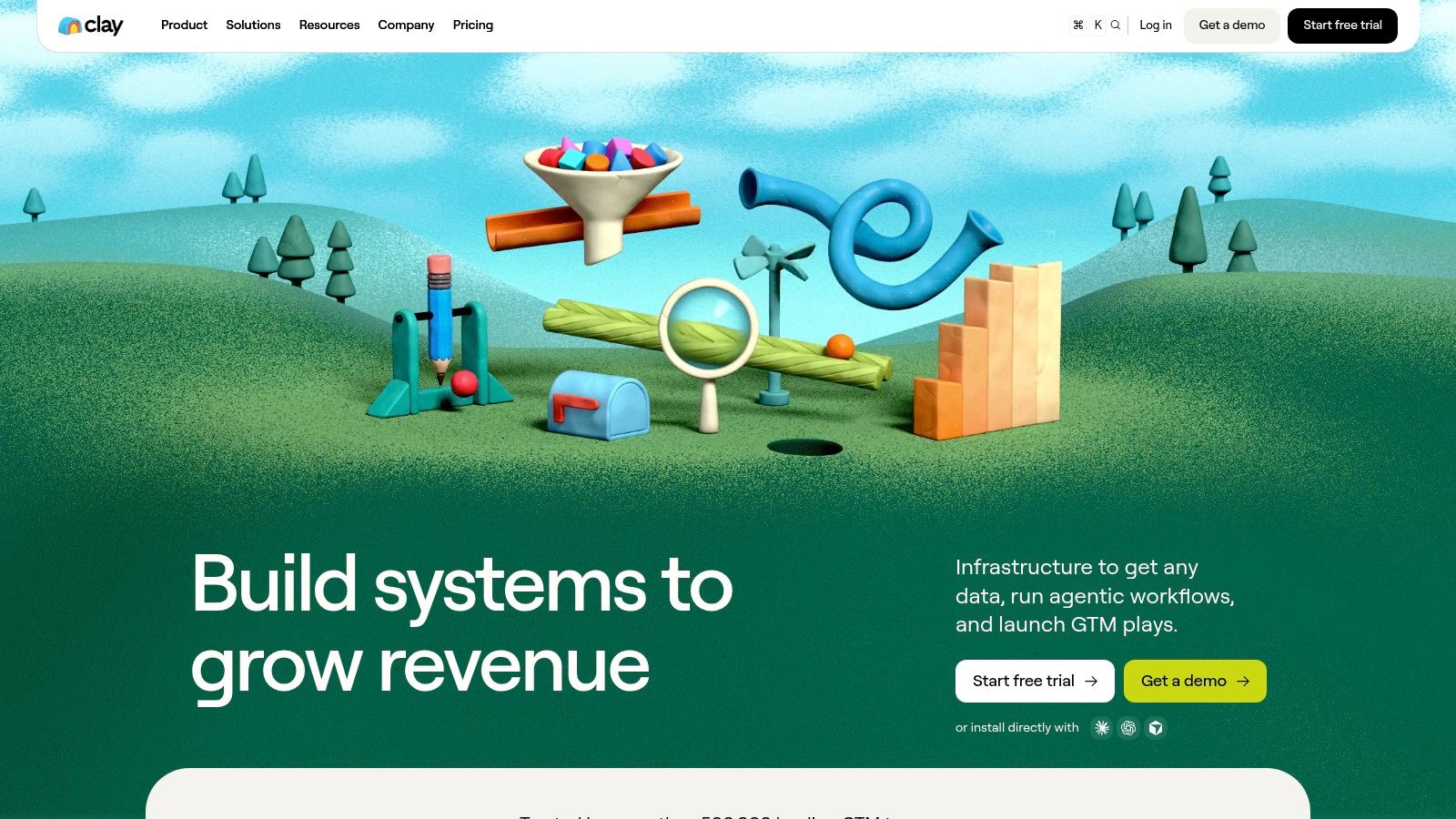
Clay isn't a contact database with a chat box attached. It's a research and enrichment workspace where a team assembles its own prospecting logic, pulling from more than 150 data providers and running Claygent, its AI web research agent, to gather details no standard filter covers.
A 2026 survey of 153 sales leaders and representatives, reported by Yahoo Finance, found 46% used AI for personalizing outreach and 77% said AI improved prospecting effectiveness. That's the work Clay targets: custom inputs for a message, not the message itself. The sample is small, so read it as directional.
Where it fits and where it hurts
- Targeting that filters can't express: "Companies hiring their first compliance lead" is a Claygent task, not a dropdown.
- Signal tracking: Job-change and similar signals sit on paid plans, with CRM sync, webhooks and API workflows on higher tiers.
- Two usage meters: Data credits and actions are counted separately, and both need watching.
Clay's pricing page lists a free plan and paid tiers. Verify the current price and included credits before buying, because total cost moves with plan, usage and which enrichment sources a workflow calls. The trade-off is setup time. RevOps and technically minded teams benefit here. A two-person sales team that just wants a list will find it slower than Apollo.
3. LinkedIn Sales Navigator
Say a rep sells to heads of engineering at mid-market manufacturers. The hard part isn't finding a name, it's knowing who moved into the role last quarter and which colleague already knows them. That's the job LinkedIn Sales Navigator does, and no email database does it as well.
The product offers more than 50 sales-focused search filters, saved leads and accounts, alerts, and InMail. Account IQ and Lead IQ insights are available on eligible plans, and CRM syncing comes with Advanced Plus. Core pricing starts at $119.99 per license per month as listed by LinkedIn, while Advanced Plus requires a quote.
The relationship path is the product. A shared connection or a recent role change gives a rep a reason to write that a purchased email list can't supply.
Two limits matter for stack planning. Sales Navigator isn't a complete outbound data and sequencing platform, so verified emails and phone numbers usually come from another vendor, and sending happens elsewhere. And the AI features vary by plan, language and availability, which means a demo on one account doesn't guarantee the same experience for a team in another market.
Buy it as the discovery and research layer. Pair it with a data provider for contact details and a sequencer or CRM workflow for outreach, and budget for all three rather than expecting one license to cover the chain.
4. HubSpot Breeze Prospecting Agent
For teams already running HubSpot, this is the shortest path from CRM records to agent-written outreach. The Breeze Prospecting Agent monitors prospects for buying signals, researches target accounts, prepares personalized outreach and recommends leads, drawing on CRM and business context a standalone tool would have to be fed manually. Its job in the outbound chain is the outreach step: it works the records you already hold, so contact discovery and enrichment still belong to another tool.
Agents are spreading faster than prospecting use of them. Salesforce's 2026 State of Sales report, covering 4,050 sales professionals across 22 countries, found 54% of sales teams were using AI agents, while 34% of teams with agents used them for prospecting. Deployment and actual prospecting usage are two different numbers. Ask which one a vendor is quoting.
Pricing and the review step
- Eligibility: The agent is available to Professional and Enterprise customers, so it isn't an entry point into HubSpot.
- Per-lead cost: Usage draws on HubSpot Credits on top of the subscription, charged per lead the agent recommends for outreach. Model the credit spend against your expected lead volume before turning it loose.
- Human approval: There's a review step before emails send, plus an autonomous mode for teams that want it.
Keep the review step on until reply quality is proven. The agent's output is only as good as the CRM records behind it, so clean ownership rules and duplicate handling come first, the same discipline covered in DBotMaker's CRM workflow automation guide. Teams that don't want HubSpot as their CRM should look elsewhere.
5. AiSDR
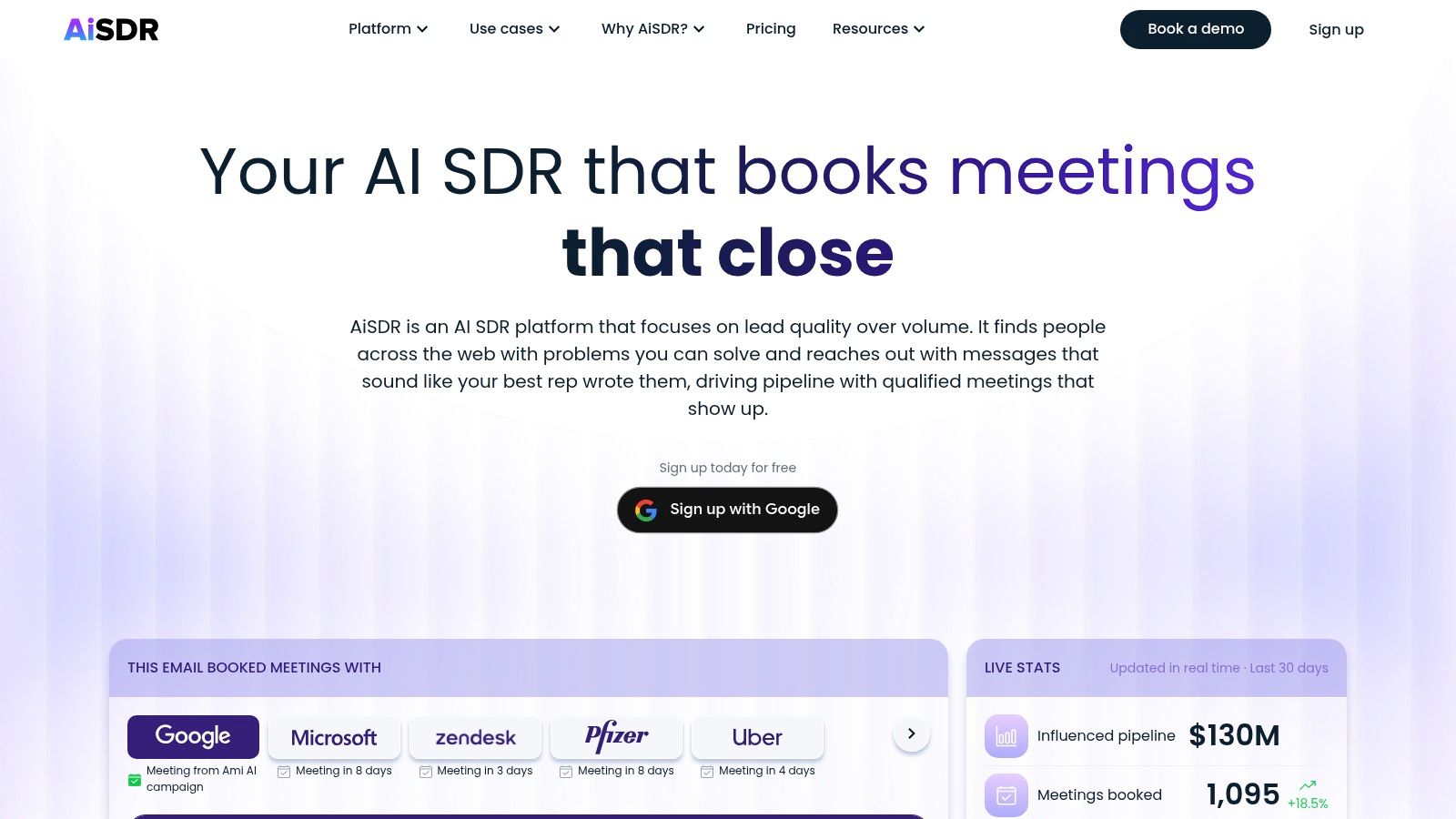
AiSDR sells the sequence, not the list. Its agent, Ami, researches prospects, builds campaigns, personalizes messages and follows up across email and LinkedIn, with contact enrichment drawn from multiple data providers.
The business case for handing more of the chain to an agent is real but observational. Salesforce's 2024 research, summarized in Autobound's state of AI sales prospecting review, found sellers who effectively partnered with AI were 3.7 times more likely to meet quota than sellers who didn't. Companies with better data and stronger management are also more likely to adopt AI, so that figure isn't proof the tool caused the result.
Cost and oversight
AiSDR prices its self-serve pay-as-you-go option at $1.50 per person prospected, and offers subscription plans whose current terms should be confirmed with the vendor. Per-prospect billing is cheap to test and expensive to scale, so model next quarter's volume before committing.
- Integrations: Gmail, Outlook, HubSpot, Salesforce, Aircall and Calendly.
- Supervision: Automated messaging needs review for factual accuracy, tone and compliance, especially claims about a prospect's company.
For a wider view of agents that handle replies and book meetings, DBotMaker's best AI SDR tools ranking covers that category separately.
6. Cognism
Phone-led teams selling into the UK and Europe should shortlist Cognism first. It's a B2B sales-intelligence platform for finding and enriching company and contact records, and its Diamond Data offering focuses on phone-verified mobile numbers, which matters when a dialer campaign lives or dies on connect rate.
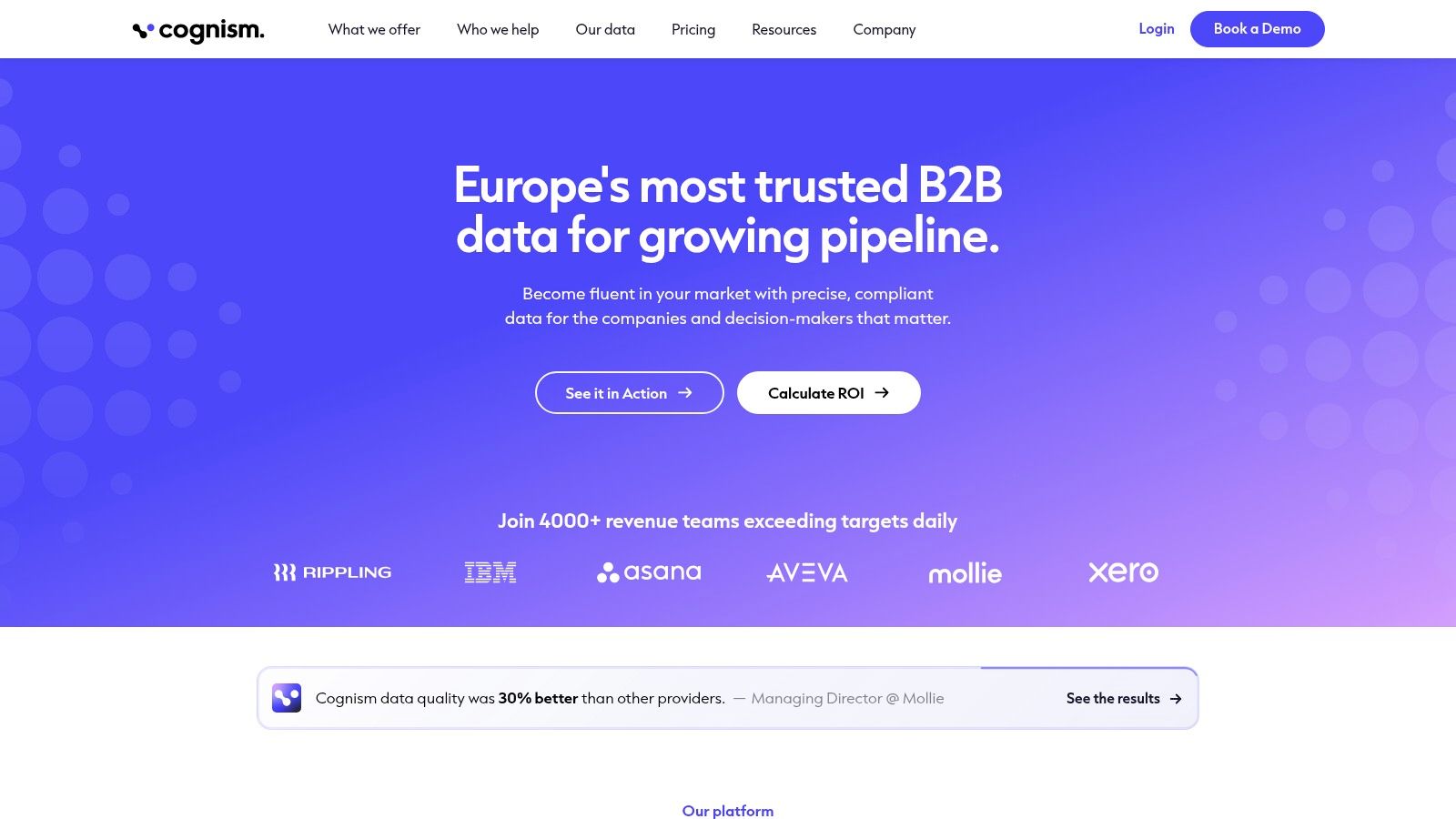
Intent data based on selected topics helps prioritize companies researching relevant subjects, and the platform connects to CRM and sales-engagement tools. Cognism also publishes information about its do-not-call screening practices, which is the kind of documentation a compliance reviewer will ask for.
The legal layer buyers skip
GDPR doesn't grant a blanket permission for automated prospecting. As lemlist's GDPR cold email guide explains, Article 6(1)(f) permits processing where it's necessary for the sender's legitimate interests and those interests aren't overridden by the individual's rights and freedoms, tested through a specific purpose, necessity, and a balancing test covering the recipient's rights, expectations, professional role and how the data was obtained.
A vendor's compliance badge doesn't transfer liability. The sending company still needs data-source records, suppression handling, a clear way to object, and a check of the recipient country's ePrivacy rules.
Pricing is by custom quote, and premium features such as Diamond Data can affect the package. Test coverage against the exact geographies and job titles the team sells to before signing.
7. ZoomInfo Sales / Copilot
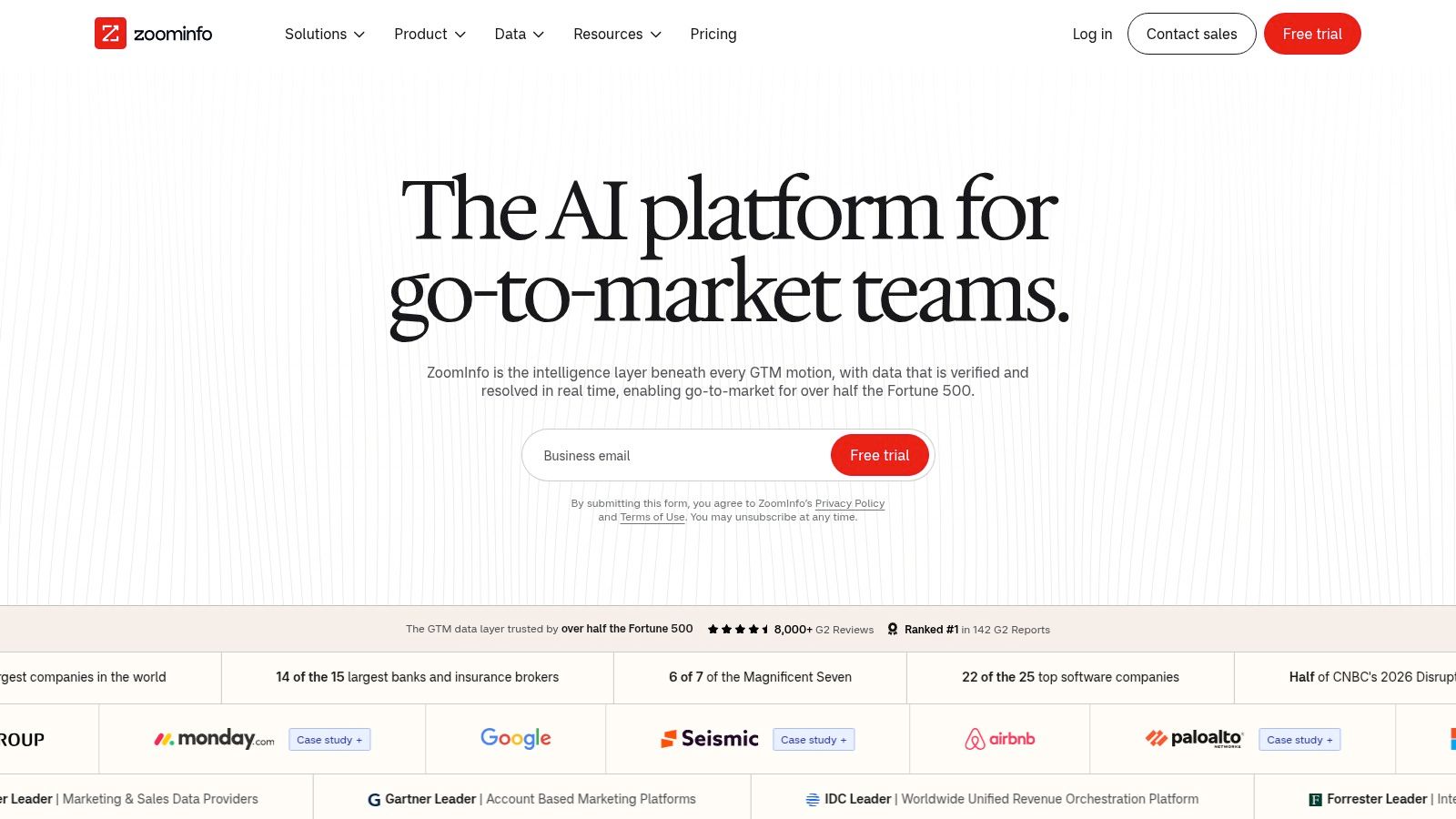
ZoomInfo is the broad-coverage option for revenue teams that need company data, contact data, intent and CRM-connected workflows in one contract. Copilot layers AI guidance on top, helping sellers prioritize accounts, surface prospects and use account context to shape outreach.
Breadth doesn't settle the accuracy question. Stealth Agents' 2026 AI sales tools adoption statistics report that 57% of sales teams cite poor data quality as a limitation and 28% report concern about hallucinations in prospect research. Those are the two failure modes a large database and an AI summary can each produce.
What to test before the quote turns into a contract
- Verified email rate: Run a representative sample of target accounts and check bounces before scaling sends.
- Title and company status accuracy: Confirm the person still holds the role and the company still exists in the form the record describes.
- Unsupported claims: Read Copilot's account context against the source it came from, and reject anything the rep can't verify.
- Duplicate behavior: Check what happens when a record already exists in the CRM under another owner.
ZoomInfo prices by quote, which makes early cost comparison hard, and the platform can be more than a small team with simple prospecting needs requires. Eligible customers can also use ZoomInfo data inside supported AI experiences, which is useful only if the underlying records hold up.
8. 6sense Sales Intelligence
Account-based teams don't need more contacts, they need an order of operations. 6sense Sales Intelligence combines predictive AI scores and dashboards, intent signals, alerts, company and contact data, buyer discovery and persona mapping, plus a Sales Copilot that produces account summaries and recommended actions.
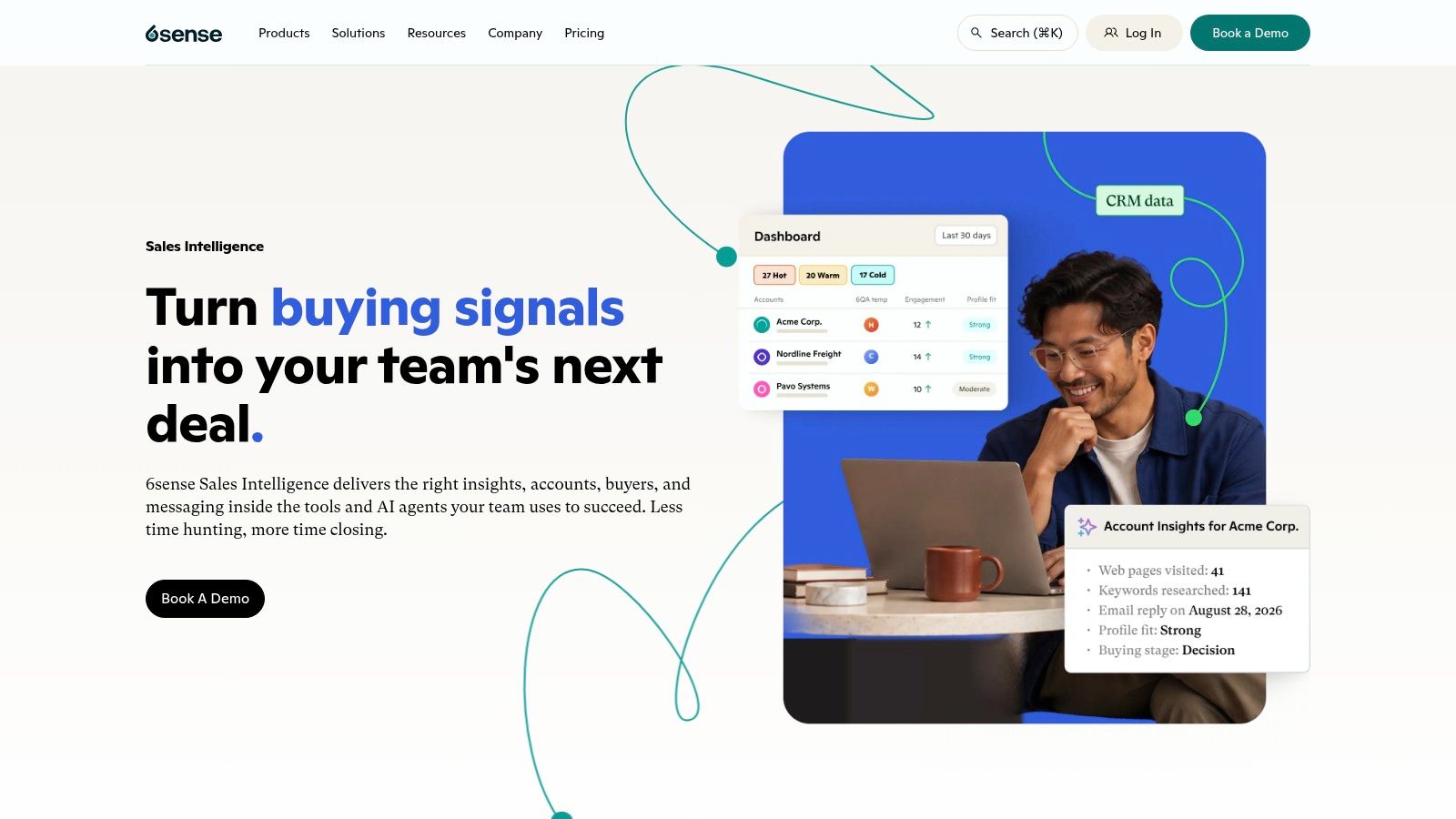
The distinction against a lookup tool is the unit of work. A database answers "who exists at this company." 6sense answers "which company should the team work this week, and which people in the buying group matter." That only pays off when someone acts on the ranking daily.
- Operational dependency: Signals need clean CRM and marketing-automation context, plus a sales manager who enforces the prioritized queue.
- Adoption dependency: If reps keep working their own lists, predictive scores become a dashboard nobody opens.
- Packaging: Sales intelligence and data options can be packaged around different needs, so scope the demo to the modules the team will use.
Pricing is customized and prospective customers book a demo. That's a real cost in evaluation time, and it's the wrong purchase for casual prospecting or a founder testing a first outbound motion. Buy it when the team already runs an account-based motion and the bottleneck is choosing accounts, not finding names.
9. Lusha
Lusha is the lookup tool for individual sellers and small teams who need a specific person's email or mobile, not a platform rollout. It works through its web platform, a browser extension and integrations, with AI search, recommendations and buying signals on eligible plans.
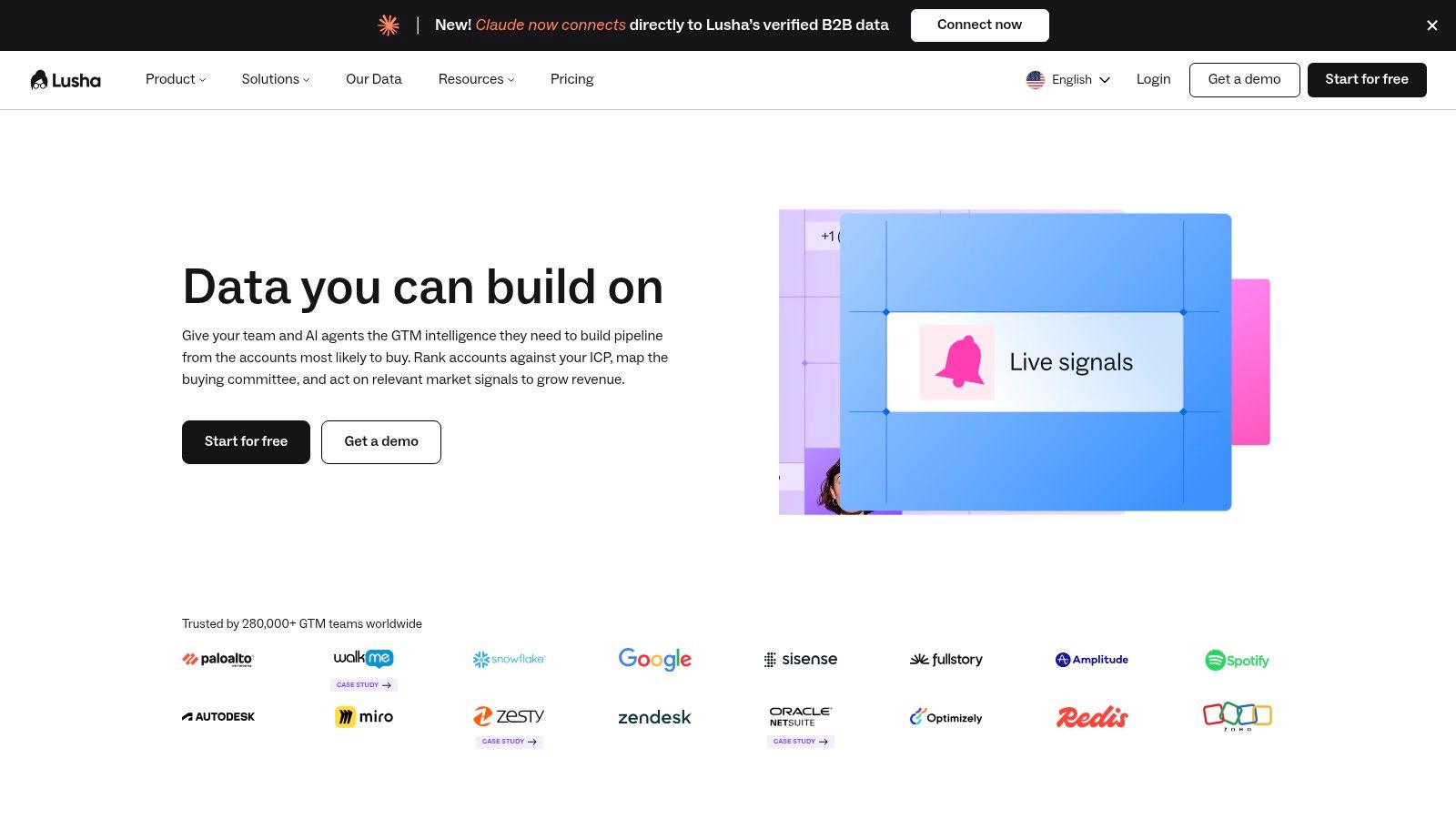
The credit math is published and easy to plan around. Lusha lists a permanent free plan with 40 credits per month, and charges one credit to reveal an email and five credits to reveal a phone number. Phone-heavy prospecting therefore burns an allowance five times faster than email-only work, which is the single most important number to model before adding seats.
Practical rule: Decide email-first or phone-first before choosing a tier. The same monthly credit pool supports very different campaign volumes depending on which field the team reveals.
Plans carry seat and feature limits, and the AI-assistant connectors don't send outreach. A rep can pull a contact into an assistant workflow, but a separate sequencer or CRM campaign still has to do the sending. Lusha fills the contact gap cleanly and stops there, which is exactly what a small team with an existing email tool needs.
10. lemlist
Use lemlist when the gap is outreach execution. It covers both the data side and the sending side: a lead database with email and phone finder, plus a sequencing engine that runs the campaign. AI agents are included in the listed plans, and the Multichannel plan adds LinkedIn and SMS automation on top of email.
Volume is where outbound teams misjudge the economics. A 2024 prospecting benchmark published by Keendai reported average cold-email reply rates of 3.43% to 5.1%, with roughly one meeting booked for every 306 to 774 prospects depending on targeting and personalization. Treat those as industry estimates, not a promise. They show why list quality decides how many contacts a meeting costs, especially when data reveals and sending limits are paid separately. For broader benchmarks, use this cold email statistics resource.
What to check on the plan
- Users and senders: The Email plan includes unlimited users and senders according to lemlist's pricing page, which also lists a 14-day trial.
- Lookup credits: Data reveals use additional credits on top of the plan, so model them separately from sending limits.
- Deliverability: Warm up sending domains, verify addresses before the first send, and use the inbox and deliverability tools rather than assuming placement.
Multichannel costs more than the Email plan. Pay for it only when LinkedIn and SMS are part of the sequence.
How the ten AI prospecting tools compare on pricing model, free access and best fit
| Item | Pricing model | Free option | Best fit |
|---|---|---|---|
| Apollo | From $49 per seat/month, billed annually | Free plan available | Small and midsize teams combining prospecting and outbound |
| Clay | Paid plans; pricing and credits vary | Free plan available | RevOps and technical teams building custom enrichment workflows |
| LinkedIn Sales Navigator | Core from $119.99 per license/month; higher tiers vary | No free plan specified | Sellers researching buyers and relationships on LinkedIn |
| HubSpot Breeze Prospecting Agent | $1 per recommended lead, plus HubSpot subscription and credits | No free option specified; requires Professional or Enterprise | Teams already using HubSpot |
| AiSDR | Pay as you go at $1.50 per person prospected; subscriptions also available | No free option specified | Teams automating prospect research and multichannel outreach |
| Cognism | Custom quote | No free option specified | UK and European teams prioritizing verified phone data |
| ZoomInfo Sales / Copilot | Custom quote | No free option specified | Larger revenue teams with complex go-to-market workflows |
| 6sense Sales Intelligence | Customized pricing | No free option specified | Account-based teams prioritizing accounts with buying signals |
| Lusha | Credit-based plans | Permanent free plan with 40 credits/month | Individual sellers and small teams looking up contacts |
| lemlist | Paid plans; data lookups use additional credits | 14-day trial | Teams combining prospect discovery with multichannel outreach |
Match the Tool to the Gap, Then Test the Data
Name the gap in one sentence before opening a pricing page. If the team can't find the right people, a database fills it: Apollo for discovery plus sending, Lusha for targeted lookups, Cognism for phone-verified European coverage, ZoomInfo for breadth. If the team has names but no research or follow-up, an agent covers more of the sequence: AiSDR for email and LinkedIn execution, the HubSpot Breeze Prospecting Agent for teams already living in HubSpot. Clay builds custom enrichment logic, LinkedIn Sales Navigator supplies relationship context, 6sense decides which accounts to work first, and lemlist runs the campaign itself.
Then do three things before signing.
- Model usage at real volume: Price the month in credits, per-lead charges or per-prospect fees, not in seats. A cheap seat price with a tight credit allowance is the most common budget surprise in this category.
- Run a representative segment: Push a slice of actual target accounts through the tool and measure verified email rate, title accuracy, company status, unsupported claims in AI research, and bounce rate. Vendor demo sets prove nothing about a specific market.
- Confirm the price with the seller that day: Published prices change, quote-based platforms scope packages per customer, and credit inclusions shift between tiers. DBotMaker copies prices from makers' pages on the date shown, and the seller's own quote is what governs the purchase.
Keep a human approval step on AI-written outreach until reply quality is proven, and keep data-source records and suppression handling in place regardless of which vendor supplies the contacts. The most autonomous option isn't automatically the best one when a wrong claim about a prospect's company costs credibility and sender reputation.
For readers still deciding which layer to buy first, DBotMaker's best AI SDR tools ranking compares agents that research prospects, write outreach, handle replies and book meetings, scored on capabilities, ease of setup and value. Start there if the gap is execution. Start with Apollo's free plan if the gap is contacts, run one small segment this week, and let the verified reply numbers decide the next subscription.
Cite this page
DBotMaker. 10 Best AI Tools for Sales Prospecting in 2026. Updated November 25, 2026. https://dbotmaker.io/best-ai-tools-for-sales-prospecting
Spotted an error in this guide? Email editorial@dbotmaker.io